
Category: Anti-Aging & Skincare | She Wellness Hub | ~10 min read
Disclosure: This post contains Amazon affiliate links. If you buy through our links we earn a small commission at no extra cost to you. We only recommend things we genuinely stand behind.
I Thought My Skin Was Just ‘Getting Older’ — Until I Figured Out What It Actually Needed
I remember standing in front of the bathroom mirror on my 36th birthday, squinting at my reflection and thinking — when did that happen? It wasn’t just one thing. It was the faint lines around my eyes that definitely hadn’t been there a year ago, the skin on my jawline that looked just slightly less firm than I was used to, and this overall dullness that no amount of sleep seemed to fix.
I’d been using the same moisturiser for years and it was perfectly fine — until suddenly it wasn’t. I started doing what most of us do: I fell down a Google rabbit hole at 11pm, ended up buying three different serums in one sitting, used them all at the same time, and promptly gave myself a reaction that made things considerably worse.
That painful (and expensive) experiment sent me on a much slower, more deliberate journey into understanding what my skin actually needed after 35. And here’s what I learned: your skin doesn’t need a 12-step routine or a cabinet full of products. It needs the right ingredients — ideally natural ones that work with your body, not against it.
What follows is everything I’ve learned, tested, and recommended to friends and readers over the past several years. Some of these I use every single day. Some I wish someone had told me about much sooner.
Why 35 Is the Turning Point Most Women Don’t Expect
Here’s the thing nobody really explains clearly: after 35, your skin’s collagen production starts dropping by roughly 1% every year. That sounds small, but it adds up fast. Collagen is what keeps skin plump, firm, and bouncy. Less collagen means less elasticity, and less elasticity means things start to… shift.
On top of that, estrogen — which plays a huge role in keeping skin hydrated and thick — starts to fluctuate. Cell turnover slows down, so dead skin cells hang around longer and your complexion starts to look flat and tired. Sun damage from your 20s also starts showing up now, in the form of dark spots and uneven texture.
None of this is catastrophic. But it does mean that what worked for your skin at 25 probably isn’t enough anymore. The good news? Nature has some genuinely remarkable solutions.
10 Natural Anti-Aging Ingredients Worth Actually Using
1. Vitamin C — The One I Wish I’d Started Years Earlier
If I had to pick just one thing from this entire list to start with, it would be Vitamin C. I’ve been using a Vitamin C serum every morning for about three years now and the difference in my skin tone is genuinely significant. Dark spots I’d accumulated from years of not wearing enough sunscreen — gone, mostly. That 2pm dullness — much better.
Vitamin C is a potent antioxidant that does two important things for aging skin: it neutralises free radicals caused by sun exposure and pollution, and it actively boosts collagen production. It’s also one of the key ingredients your skin needs to synthesise collagen properly — without enough Vitamin C, even the collagen supplements you’re taking can’t do their job as well.
How to use it: Look for a serum with 10–20% L-ascorbic acid (that’s the most potent form). Apply it in the morning on clean skin before your moisturiser and sunscreen. It can cause tingling at first — that’s normal, it settles down within a week or two.
Home remedy: Mix a teaspoon of fresh lemon juice with a tablespoon of raw honey and a tablespoon of plain yogurt. Leave it on for 10–15 minutes twice a week. The Vitamin C in lemon brightens, honey hydrates, and the lactic acid in yogurt gently exfoliates — all in one mask.
Mistake to avoid: Don’t use Vitamin C and retinol at the same time. Vitamin C goes on in the morning, retinol at night. Using them together causes irritation and cancels out some of the benefits of both.
Amazon pick: TruSkin Vitamin C Serum — Affordable, well-reviewed, and a solid starter Vitamin C for women beginning a brightening routine. Shop on Amazon →
2. Retinol — The Ingredient That Changed My Skin More Than Anything Else
I’m going to be honest with you: I was intimidated by retinol for years. I’d read that it causes peeling and redness and I thought, why would I voluntarily put something on my face that makes it worse? So I avoided it until a friend who’s an aesthetician basically sat me down and explained what I was missing.
Retinol — a form of Vitamin A — is the most clinically studied and consistently proven anti-aging ingredient there is. Full stop. It speeds up cell turnover, which means it pushes new, fresher skin to the surface while helping fade dark spots, smooth texture, and reduce the depth of fine lines. After about three months of consistent use, my skin looked genuinely younger and more even than it had in years.
The peeling and sensitivity are real — but they’re manageable if you introduce it slowly. Start two nights per week with a low-strength formula (0.025% or 0.05%) and build up gradually. Your skin adapts within four to six weeks.
How to use it: Apply at night on clean, dry skin. Wait a full 20 minutes after washing your face before applying — damp skin absorbs it more aggressively and increases irritation. Follow with a plain, simple moisturiser. Always — always — wear SPF the next morning.
Home remedy: If retinol is too intense for you right now, mash a small piece of ripe papaya and apply as a mask for 15 minutes. Papain, the enzyme in papaya, mimics retinol’s gentle resurfacing effect without any of the irritation. Great to use on the nights you’re not using retinol.
Mistake to avoid: Starting with a high-strength retinol because you want faster results. This is how you end up with the red, flaky, angry skin horror story. Slow and steady wins this particular race.
Amazon pick: RoC Retinol Correxion Night Cream — A gentle, beginner-friendly retinol that’s been a consistent bestseller for over 30 years. A great place to start. Shop on Amazon →
3. Hyaluronic Acid — The Thing That Gives You That ‘Dewy’ Look
Before I understood hyaluronic acid, I thought the solution to dry, dull skin was just using a thicker moisturiser. Nope. What my skin was actually missing was something that would help it hold onto water in the first place — and that’s exactly what hyaluronic acid does.
Your body makes hyaluronic acid naturally, but levels drop significantly after 35. A single HA molecule can hold up to 1,000 times its weight in water, which is why it’s so effective at plumping skin and smoothing out fine lines almost instantly. It’s also completely non-comedogenic — meaning it won’t clog pores — which makes it safe for literally every skin type.
How to use it: Apply hyaluronic acid serum to slightly damp skin (spray a little water on your face first or apply straight after washing). This is important — HA draws moisture from its environment, and if your skin is dry and the air is dry, it can actually pull moisture out of your deeper skin layers. Damp skin first, then seal with moisturiser.
Home remedy: Rose water is one of the best natural alternatives to commercial HA serums. Keep a spray bottle of pure rose water in your fridge and mist your face before your moisturiser morning and night. For a more intense version, mix a few drops of vegetable glycerin (available at any pharmacy) into the rose water — glycerin is also a humectant and the two together are genuinely excellent.
Amazon pick: Neutrogena Hydro Boost Water Gel — Lightweight, absorbs immediately, and one of the most consistently well-reviewed drugstore moisturisers for mature skin. I’ve recommended this to so many people. Shop on Amazon →
4. Collagen Peptides — The Supplement That Actually Shows Up on Your Face
I’ll be real — I was sceptical about collagen supplements for a long time. It seemed too simple. Drink a powder, get better skin? But I started taking hydrolysed collagen peptides about two years ago mostly because a few people I trusted swore by them, and the research is actually more solid than I expected.
After eight weeks of taking it daily in my morning coffee, I noticed my skin looked more plump and bouncy overall — less hollow under the eyes, more hydrated even on days I hadn’t done much to my skin. My nails also got noticeably stronger, which was a side effect I hadn’t expected.
The reason it works is that hydrolysed collagen peptides are collagen that has already been broken down into small enough molecules to actually be absorbed through your gut. Your body then uses those amino acids as building blocks for new collagen production. It’s not instant — you need at least eight to twelve weeks of daily use to see real results.
How to use it: One scoop (about 10–20g) in your morning coffee, tea, or smoothie. Unflavoured versions dissolve completely with no taste or texture change. Pair it with Vitamin C — either in your diet or topically — because Vitamin C is essential for the collagen synthesis process.
Home remedy: Make your own collagen broth at home: simmer chicken or beef bones for 12–24 hours with a splash of apple cider vinegar (which draws collagen out of the bones). Drink a cup daily. It’s one of the richest natural collagen sources available and far cheaper than any supplement.
Mistake to avoid: Expecting results in two weeks. Collagen supplementation needs consistent daily use over 8–12 weeks. If you quit after a month because you don’t see anything, you’ve stopped just before it would have kicked in.
Amazon pick: Vital Proteins Collagen Peptides — Unflavoured, dissolves in hot or cold liquid, 20g per serving. One of the most trusted brands with thousands of reviews. Shop on Amazon →
5. Argan Oil — The Face Oil That Won’t Make You Break Out
I spent years avoiding face oils because I have combination skin and I was terrified of making it worse. Then a friend who’d spent time in Morocco brought me a tiny bottle of pure argan oil and told me to just try it. I was convinced I’d wake up with congested skin. Instead I woke up with the softest skin I’d had in years.
Argan oil is cold-pressed from the kernels of the argan tree and it’s extraordinarily rich in oleic acid, linoleic acid, Vitamin E, and antioxidant polyphenols. The linoleic acid content is actually one of the reasons it doesn’t cause breakouts for most people — it’s a skin-compatible fatty acid that helps regulate sebum production rather than adding to it.
For women over 35, it’s particularly useful because it strengthens the skin’s barrier function, reduces the appearance of fine lines over time, and gives skin a natural glow that no highlighter quite replicates. I use it as the last step in my night routine — two or three drops pressed into slightly warm skin.
How to use it: Warm two or three drops between your palms and press (don’t rub) into clean skin as your last step at night. You can also mix one drop into your daytime moisturiser for an extra glow. Only buy 100% pure, cold-pressed, organic argan oil — products labelled ‘argan-infused’ often contain very little actual argan oil.
Home remedy: Argan oil doubles as a brilliant overnight hair treatment. Apply a few drops to the mid-lengths and ends of your hair before bed, sleep on a silk pillowcase, and rinse in the morning. Hair thinning and dryness after 35 is incredibly common due to hormonal changes, and this is one of the simplest things you can do for it.
Amazon pick: Leven Rose 100% Pure Organic Argan Oil — Single ingredient, cold-pressed, unrefined. No fillers, no added fragrance. One of the cleanest argan oils available. Shop on Amazon →
6. Green Tea Extract — The Antioxidant You Probably Already Have in Your Kitchen
Green tea is one of those ingredients that sounds almost too ordinary to be effective. But the research behind it is impressive. It contains EGCG (epigallocatechin gallate), one of the most potent antioxidant compounds known, which has been shown to protect skin from UV damage, reduce inflammation, slow collagen breakdown, and even reactivate dying skin cells.
For women over 35 dealing with redness, uneven skin tone, or sun damage, green tea is genuinely calming and protective. It’s also one of the few natural ingredients that has demonstrated effects on hormonal acne that can appear during perimenopause — it helps regulate DHT, the hormone responsible for adult breakouts.
How to use it topically: Brew two green tea bags, let the tea cool completely, and pour it into a spray bottle. Use it as a toner morning and evening before moisturiser. Store in the fridge for up to a week. Cold green tea also does wonders for under-eye puffiness — mist it directly on and pat gently.
How to use it internally: Two to three cups of green tea daily gives you consistent antioxidant support. If you dislike the taste, green tea extract capsules deliver the same EGCG without the brew.
Home remedy: Brew a strong cup of green tea and let it cool. Add a teaspoon of raw honey and a few drops of lemon juice. Soak two cotton pads, place them over closed eyes for 10 minutes. The caffeine and EGCG reduce puffiness and dark circles naturally — more effectively than most expensive eye creams I’ve tried.
Amazon pick: Bulk Supplements Green Tea Extract — Pure EGCG, no fillers, easy to add to your routine as a supplement for internal antioxidant support. Shop on Amazon →
7. Rosehip Seed Oil — Nature’s Answer to Uneven Skin Tone
Rosehip oil flew under the radar for a long time — it was always the less glamorous sibling of argan oil. But it’s had a well-deserved moment in the last few years, and for good reason. Cold-pressed from wild rose seeds, it’s naturally rich in Vitamin A (tretinoin), Vitamin C, and essential fatty acids, making it a genuinely multi-functional anti-aging oil.
I started using it specifically to fade some post-inflammatory marks and one particularly stubborn dark spot on my cheek, and within about six weeks I noticed significant improvement. It’s also the oil I recommend most often to women who want retinol-like results but find retinol too irritating.
How to use it: Three to four drops at night on clean skin, after any water-based serums but before a heavier moisturiser. It absorbs relatively quickly. If you’re also using retinol, use them on alternate nights rather than together.
Home remedy: Mix three drops of rosehip oil with a pinch of turmeric powder and a teaspoon of aloe vera gel. Apply as a face mask for 20 minutes, then rinse. This combination tackles dark spots, inflammation, and dryness simultaneously. Use two to three times a week.
8. Aloe Vera — The Most Underrated Anti-Aging Ingredient in Your House
Almost everyone has had aloe vera on a shelf at some point — usually for sunburn. But fresh aloe vera gel is genuinely one of the most effective natural skincare ingredients available, especially for women over 35 who are dealing with dryness, sensitivity, or inflammation alongside the usual aging concerns.
Aloe stimulates fibroblasts — the cells responsible for producing collagen and elastin. That’s not a small claim. It also contains over 75 active compounds including vitamins A, C, and E, amino acids, enzymes, and salicylic acid. The fresh gel from the plant is significantly more potent than most commercial aloe products, which are usually mostly water with a small percentage of aloe.
If you can, grow an aloe vera plant at home. They’re essentially indestructible — water them once a week, leave them in sunlight, and they thrive. Snap off a leaf, scrape out the clear gel, and you have one of the most effective skincare ingredients money can’t buy.
Home remedy: Apply fresh aloe vera gel directly to your face as an overnight mask three nights a week. Snap a leaf, scrape the gel into a small bowl, apply a generous layer and leave it on. Rinse in the morning. Your skin will feel noticeably softer and more hydrated within days. Also works brilliantly under eyes for puffiness and dark circles.
Mistake to avoid: Buying aloe gel products that list aloe extract or ‘aloe powder’ far down the ingredient list. If the first ingredient is water, you’re mostly paying for water. Look for products where aloe is the first or second ingredient, or just use the plant directly.
9. Turmeric — The Kitchen Spice That’s Doing More for Your Skin Than You Know
Turmeric has been used in Ayurvedic skincare and traditional South Asian beauty rituals for thousands of years. I grew up watching my grandmother apply a turmeric paste to her face before special occasions, and she had genuinely remarkable skin well into her 70s. I used to think it was just a cultural tradition. Turns out the science backs her up entirely.
Curcumin, turmeric’s active compound, is one of the most potent natural anti-inflammatory agents known. And inflammation — often called ‘inflammaging’ in scientific literature — is one of the primary drivers of skin aging. Chronic low-level inflammation breaks down collagen, accelerates cell damage, and causes the redness, uneven tone, and dullness that becomes more common after 35.
Turmeric addresses this at the root. It also has demonstrated effects on hyperpigmentation, making it particularly useful for women who are seeing age spots and uneven tone develop.
How to use it internally: Add turmeric to your daily diet — golden milk (warm plant milk with turmeric, a pinch of black pepper, and honey), smoothies, soups, curries. The black pepper is important: piperine in black pepper increases curcumin absorption by up to 2,000%.
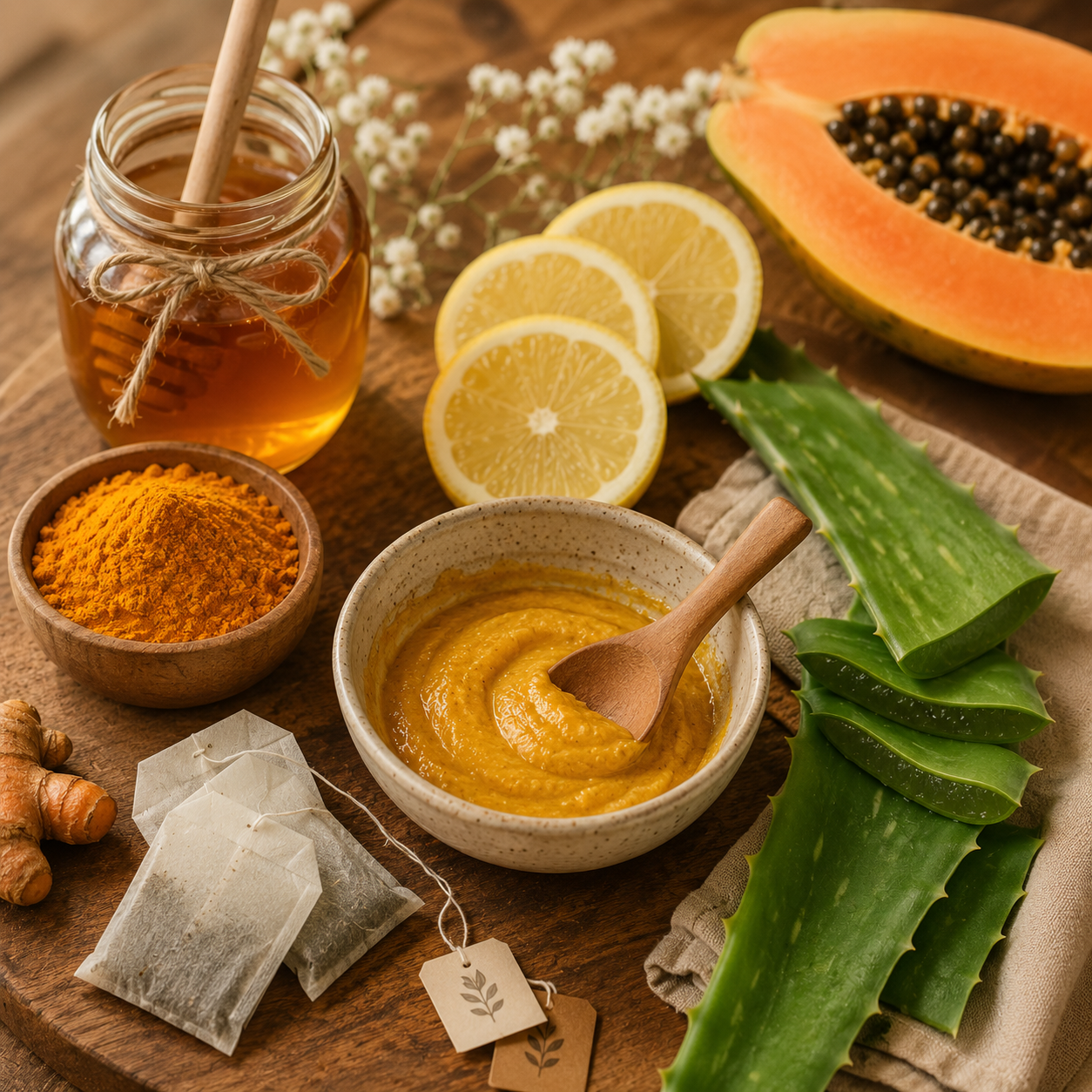
Home remedy: Mix one teaspoon of turmeric with two tablespoons of raw honey and one tablespoon of milk or plant milk. Apply to your face for 15–20 minutes and rinse thoroughly. This is one of the most powerful brightening masks in Ayurvedic skincare. Fair warning: rinse thoroughly and use an old towel — turmeric will stain both temporarily.
10. Bakuchiol — The Plant-Based Retinol Most Women Haven’t Heard of Yet
Bakuchiol is the newest ingredient on this list and also, I think, one of the most exciting. It’s extracted from the seeds of the Psoralea corylifolia plant and has been used in both Ayurvedic and traditional Chinese medicine for centuries — though it’s only recently been studied specifically for its anti-aging effects.
A well-cited clinical study published in the British Journal of Dermatology found that bakuchiol delivered comparable results to retinol — similar improvement in fine lines, skin firmness, and overall skin quality — but with significantly less irritation, dryness, and sensitivity. For women who’ve tried retinol and found it too harsh, or who are pregnant or breastfeeding (retinol is not recommended during pregnancy), bakuchiol is a genuinely useful alternative.
Unlike retinol, you can also use bakuchiol during the day without worrying about increased sun sensitivity. It’s gentle enough for twice-daily use from the start, with no adjustment period required.
How to use it: Apply morning and evening to clean skin before moisturiser. It can be used alongside most other ingredients without compatibility issues — unlike retinol, which needs to be kept separate from certain actives. If you pair it with rosehip oil at night you have two natural retinol alternatives working together.
Mistake to avoid: Assuming ‘natural’ automatically means slower or weaker. Bakuchiol works differently from retinol at a molecular level — it’s not a lesser version, just a different route to similar results.
Amazon pick: Herbivore Bakuchiol Retinol Alternative Serum — A clean, plant-based formula that’s become a go-to for women with sensitive skin who want retinol results without the irritation. Shop on Amazon →
How I Actually Use These Every Day (A Realistic Routine)
I know that list of 10 ingredients looks like a lot. Let me show you how it fits into a normal morning and evening routine without taking over your life.
Morning (about 5 minutes)
- Gentle cleanser
- Vitamin C serum — let it sink in for a minute while you brush your teeth
- Hyaluronic acid serum on slightly damp skin
- Moisturiser
- SPF 30+ — non-negotiable, every single day, even inside
- Optional: rose water mist before your moisturiser for extra hydration
Evening (about 7 minutes)
- Double cleanse — oil cleanser first, then gentle foaming cleanser
- Retinol OR bakuchiol serum (I alternate: retinol 3 nights a week, bakuchiol the others)
- Rosehip or argan oil — 2–3 drops pressed over the serum
- Night moisturiser or plain aloe vera gel
- 2x per week: turmeric mask or papaya enzyme mask instead of the serum step
Daily supplement
- Collagen peptides in morning coffee or smoothie
- 2–3 cups of green tea throughout the day
- Turmeric in food or golden milk
Mistakes I’ve Made (So You Don’t Have To)
Using too many actives at once. This was my original sin. When I first got serious about anti-aging skincare I layered Vitamin C, retinol, a glycolic acid toner, and a niacinamide serum all in one night. My skin was not happy. Start with one active ingredient, use it consistently for four to six weeks, then add another if you want to. Your skin needs time to adjust.
Skipping sunscreen. Every single ingredient on this list works better when you’re protecting your skin from UV damage during the day. Retinol especially is making your skin more photosensitive. SPF isn’t just an anti-aging step — it’s what makes all the other steps actually work.
Expecting overnight results. Retinol: 8–12 weeks. Vitamin C: 4–6 weeks. Collagen peptides: 8–12 weeks. Hyaluronic acid: immediate plumping, but sustained improvement takes weeks. Natural ingredients are not instant fixes. They work, but they require patience and consistency in a way that synthetic treatments sometimes don’t.
Buying based on packaging and price. Some of the ingredients on this list — aloe vera, turmeric, green tea, rose water — cost almost nothing. A beautiful jar doesn’t mean better skin. Learn to read ingredient lists and don’t be swayed by marketing.
A Few Final Thoughts
Your 35+ skin isn’t broken. It’s changing, and change requires a different approach — not necessarily a more complicated or more expensive one.
Start with one or two things from this list. Vitamin C in the morning and retinol (or bakuchiol if you’re more sensitive) at night, with a good SPF during the day — that alone is enough to make a meaningful difference over three months. Add collagen peptides to your morning coffee if you want to support things from the inside out. Then slowly introduce the others as you get comfortable.
The home remedies are real. They’re not a compromise — the aloe vera plant, the turmeric mask, the green tea toner — these are genuinely effective, time-tested, and free. Don’t underestimate them because they don’t come in pretty packaging.
Your skin deserves consistency more than it deserves perfection. Pick a simple routine you’ll actually stick to, give it time, and be patient with your face. It’s carried you through a lot.
Found this helpful? Save it to Pinterest so other women over 35 can find it — and explore more natural wellness guides at SheWellnessHub.com
Frequently Asked Questions
What is the single best anti-aging ingredient for women over 35?
If I had to pick one, it’s retinol. No other single ingredient has as much clinical evidence behind it. But if your skin is sensitive, bakuchiol or Vitamin C are both excellent starting points with less risk of irritation.
Can I use all 10 of these ingredients together?
Not all at the same time — and you don’t need to. Start with two or three and build slowly. The main combinations to avoid are Vitamin C and retinol at the same time (use them at different times of day), and retinol with other strong actives like glycolic acid on the same evening.
How long before I see results from natural anti-aging ingredients?
Hyaluronic acid gives you immediate plumping and hydration. Vitamin C takes four to six weeks for noticeable brightening. Retinol needs eight to twelve weeks of consistent use for real line-smoothing results. Collagen peptides typically show results at the eight to twelve week mark. Patience is the most underrated skincare ingredient.
Are these ingredients safe for sensitive skin?
Most of them — yes. Aloe vera, hyaluronic acid, bakuchiol, rose water, and green tea are all very well-tolerated. Vitamin C can cause mild tingling at first. Retinol needs a slow introduction. Turmeric can cause temporary staining. Always patch-test a new ingredient on your inner arm for 24–48 hours before applying to your face.
Do I really need to take collagen supplements, or is topical enough?
Topical ingredients address the surface — hydration, texture, protection. Collagen peptides work from the inside out, giving your body the amino acids it needs to rebuild collagen at a structural level. They address different things and work well together. You don’t need both, but if you want comprehensive support, combining topical and internal is more effective than either alone.